

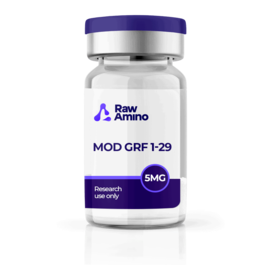
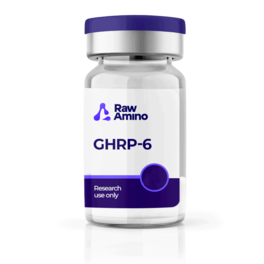
Mod GRF 1-29 & GHRP-6 – 10MG
$83.00
Discount per Quantity
| Quantity | 5 - 8 | 9 + |
|---|---|---|
| Discount | 5% | 10% |
| Price | $78.85 | $74.70 |
Scientific Overview of Mod GRF (1-29) & GHRP-6 Peptide Blend
Modified Growth Hormone Releasing Factor (Mod GRF 1-29) and Growth Hormone Releasing Peptide-6 (GHRP-6) are laboratory-designed peptides that researchers suggest may contribute to the stimulation of growth hormone release in experimental contexts. Though they appear to share a related outcome, the two peptides are believed to act through distinct pathways. Mod GRF (1-29) originates from a fragment of Growth Hormone Releasing Hormone (GHRH), while GHRP-6 is a synthetic hexapeptide structurally related to endogenous peptides like met-enkephalins. Their different receptor interactions have led researchers to speculate that when studied together, they may demonstrate complementary or synergistic actions in cellular systems.
Alternative Names: Modified Growth Hormone Releasing Factor (1-29), GHRP-6 (Growth Hormone Releasing Peptide-6)
Mod GRF (1-29) & GHRP-6 Studies and Research Data
Cellular Signaling Pathways and Pituitary Activity
Research indicates that Mod GRF (1-29) may bind to growth hormone-releasing hormone receptors located on somatotroph cells of the anterior pituitary. This interaction appears to trigger signaling events involving adenylyl cyclase, cAMP, and protein kinase A, which may contribute to changes in calcium channel behavior and stimulate the release of growth hormone. Some studies report a measurable increase in growth hormone release and corresponding insulin-like growth factor-1 (IGF-1) production in response to Mod GRF (1-29).
Conversely, GHRP-6 is thought to act through the ghrelin receptor, also known as the growth hormone secretagogue receptor (GHS-R1a). Its interaction may activate phospholipase C pathways and secondary messengers such as IP3 and DAG, potentially facilitating intracellular calcium release and subsequent secretory responses. In experimental settings, this pathway has been associated with a substantially elevated growth hormone release when compared to control conditions.
Mod GRF (1-29) & GHRP-6 Investigations on Brain and Neural Function
GHRP-6 has been explored in relation to cognitive and neurological contexts. Rodent studies suggest it may support learning, memory, and recovery following ischemic events. Findings include reduced infarct size, possible protection against glutamate-induced cell damage, and induction of neuroprotective mediators such as IGF-1 in brain regions including the hippocampus and cerebellum. While Mod GRF (1-29) has been less directly studied in this regard, its contribution as part of a blend has been hypothesized to complement the pathways stimulated by GHRP-6.
Mod GRF (1-29) & GHRP-6 Interactions with Immune and Inflammatory Pathways
Beyond its primary signaling, GHRP-6 appears to interact with CD36 receptors, which are linked to lipid metabolism, macrophage function, and angiogenesis. Some experimental findings suggest that GHRP-6 may compete with oxidized lipoproteins for receptor binding, which could alter foam cell development in atherosclerosis models. Research also highlights its potential to reduce oxidative stress markers in cardiac tissue, suggesting broader relevance in cellular stress studies. The impact of combining Mod GRF (1-29) with these properties has not yet been clarified.
Muscular and Skeletal Research Themes
Laboratory work has considered whether the blend of Mod GRF (1-29) and GHRP-6 may contribute to increases in lean tissue mass and bone density through IGF-1 signaling. Findings from individual peptides suggest rises in IGF-1 may correspond with changes in muscle growth markers. When studied together, some reports describe amplified pulsatile growth hormone release, possibly indicating a synergistic interaction. Separate research in rodent models has pointed to increases in bone mineral density associated with growth hormone secretagogues like GHRP-6, with potential implications for bone cell development and mineralization.
Conclusion
Overall, Mod GRF (1-29) and GHRP-6 have been studied as distinct peptides with complementary pathways that may converge on growth hormone and IGF-1 signaling. Evidence from cellular, animal, and biochemical studies suggests possible contributions to pituitary signaling, neurological processes, immune modulation, muscular development, and skeletal research. The combined exploration of these peptides remains of scientific interest, though findings are preliminary and context-dependent.
References
- Lei T, Buchfelder M, Fahlbusch R, Adams EF. Growth hormone-releasing peptide (GHRP-6) stimulates phosphatidylinositol (PI) turnover in human pituitary somatotroph cells. J Mol Endocrinol. 1995 Feb;14(1):135-8. doi: 10.1677/jme.0.0140135. PMID: 7772238.
- Veldhuis, J. D., & Keenan, D. M. (2008). Secretagogues govern GH secretory-burst waveform and mass in healthy eugonadal and short-term hypogonadal men. European journal of endocrinology, 159(5), 547–554. https://doi.org/10.1530/EJE-08-0414
- Subirós N, Pérez-Saad HM, Berlanga JA, Aldana L, García-Illera G, Gibson CL, García-Del-Barco D. Assessment of the dose-effect and therapeutic time window in preclinical studies of rhEGF and GHRP-6 coadministration for stroke therapy. Neurol Res. 2016 Mar;38(3):187-95. doi: 10.1179/1743132815Y.0000000089. Epub 2016 Apr 19. PMID: 26311576.
- Sinha, D. K., Balasubramanian, A., Tatem, A. J., Rivera-Mirabal, J., Yu, J., Kovac, J., Pastuszak, A. W., & Lipshultz, L. I. (2020). Beyond the androgen receptor: the role of growth hormone secretagogues in the modern management of body composition in hypogonadal males. Translational andrology and urology, 9(Suppl 2), S149–S159. https://doi.org/10.21037/tau.2019.11.30
- Sabatino D, Proulx C, Pohankova P, Ong H, Lubell WD. Structure-activity relationships of GHRP-6 azapeptide ligands of the CD36 scavenger receptor by solid-phase submonomer azapeptide synthesis. J Am Chem Soc. 2011 Aug 17;133(32):12493-506. doi: 10.1021/ja203007u. Epub 2011 Jul 21. PMID: 21692501.
- Svensson J, Lall S, Dickson SL, Bengtsson BA, Rømer J, Ahnfelt-Rønne I, Ohlsson C, Jansson JO. The GH secretagogues ipamorelin and GH-releasing peptide-6 increase bone mineral content in adult female rats. J Endocrinol. 2000 Jun;165(3):569-77. doi: 10.1677/joe.0.1650569. PMID: 10828840.
- Frieboes RM, Murck H, Maier P, Schier T, Holsboer F, Steiger A. Growth hormone-releasing peptide-6 stimulates sleep, growth hormone, ACTH, and cortisol release in normal man. Neuroendocrinology. 1995 May;61(5):584-9. doi: 10.1159/000126883. PMID: 7617137.
- Abizaid, A., & Hougland, J. L. (2020). Ghrelin Signaling: GOAT and GHS-R1a Take a LEAP in Complexity. Trends in endocrinology and metabolism: TEM, 31(2), 107–117. https://doi.org/10.1016/j.tem.2019.09.006
- Khorram, O., Laughlin, G. A., & Yen, S. S. (1997). Endocrine and metabolic effects of long-term administration of [Nle27]growth hormone-releasing hormone-(1-29)-NH2 in age-advanced men and women. The Journal of clinical endocrinology and metabolism, 82(5), 1472–1479. https://doi.org/10.1210/jcem.82.5.3943
- Demers A, McNicoll N, Febbraio M, Servant M, Marleau S, Silverstein R, Ong H. Identification of the growth hormone-releasing peptide binding site in CD36: a photoaffinity cross-linking study. Biochem J. 2004 Sep 1;382(Pt 2):417-24. doi: 10.1042/BJ20040036. PMID: 15176951; PMCID: PMC1133797.
- Youn YS, Lee KC. Site-specific PEGylation for high-yield preparation of Lys(21)-amine PEGylated growth hormone-releasing factor (GRF) (1-29). Bioconjug Chem. 2007 Mar-Apr;18(2):500-6. doi: 10.1021/bc060173z. Epub 2007 Jan 23. PMID: 17243755.
Disclaimer:
The products mentioned are intended solely for laboratory research and in-vitro experimentation. They are not approved for human or animal use of any kind. All details provided are for educational purposes only. By purchasing from this site, you agree to comply with our Terms and Conditions.
33 reviews for Mod GRF 1-29 & GHRP-6 – 10MG
Only logged in customers may leave a review.
Related products
-

CJC-1295 & GHRP-6 – 10MG
$83.00 Add to cart -
Mod GRF 1-29 (CJC-1295 NO DAC) – 5MG
$45.00 Add to cart -
GHRP-6 – 5MG/10MG
Price range: $30.00 through $41.00 Select options This product has multiple variants. The options may be chosen on the product page
ion k –
Perfect, perfect
katie Carrey –
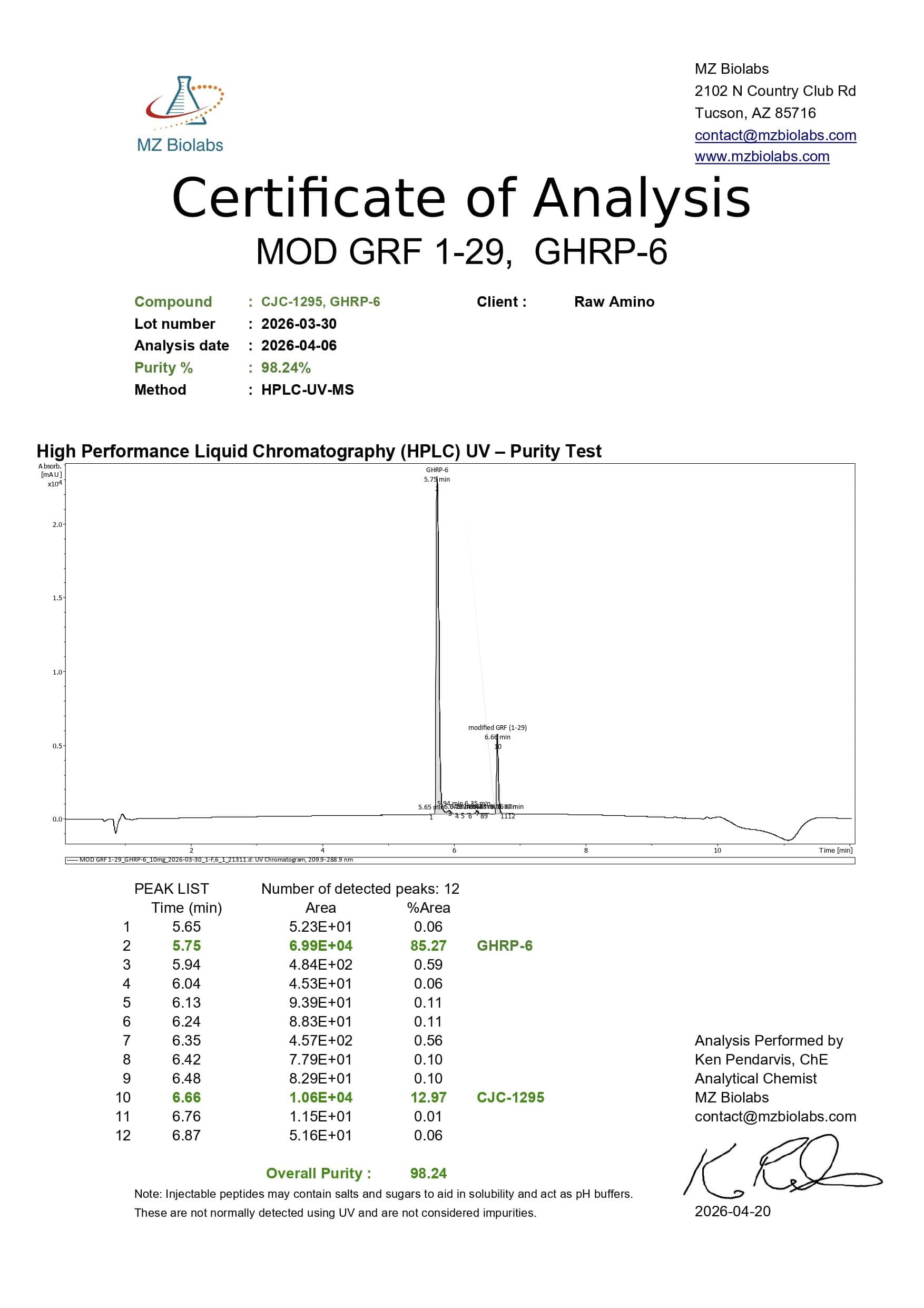
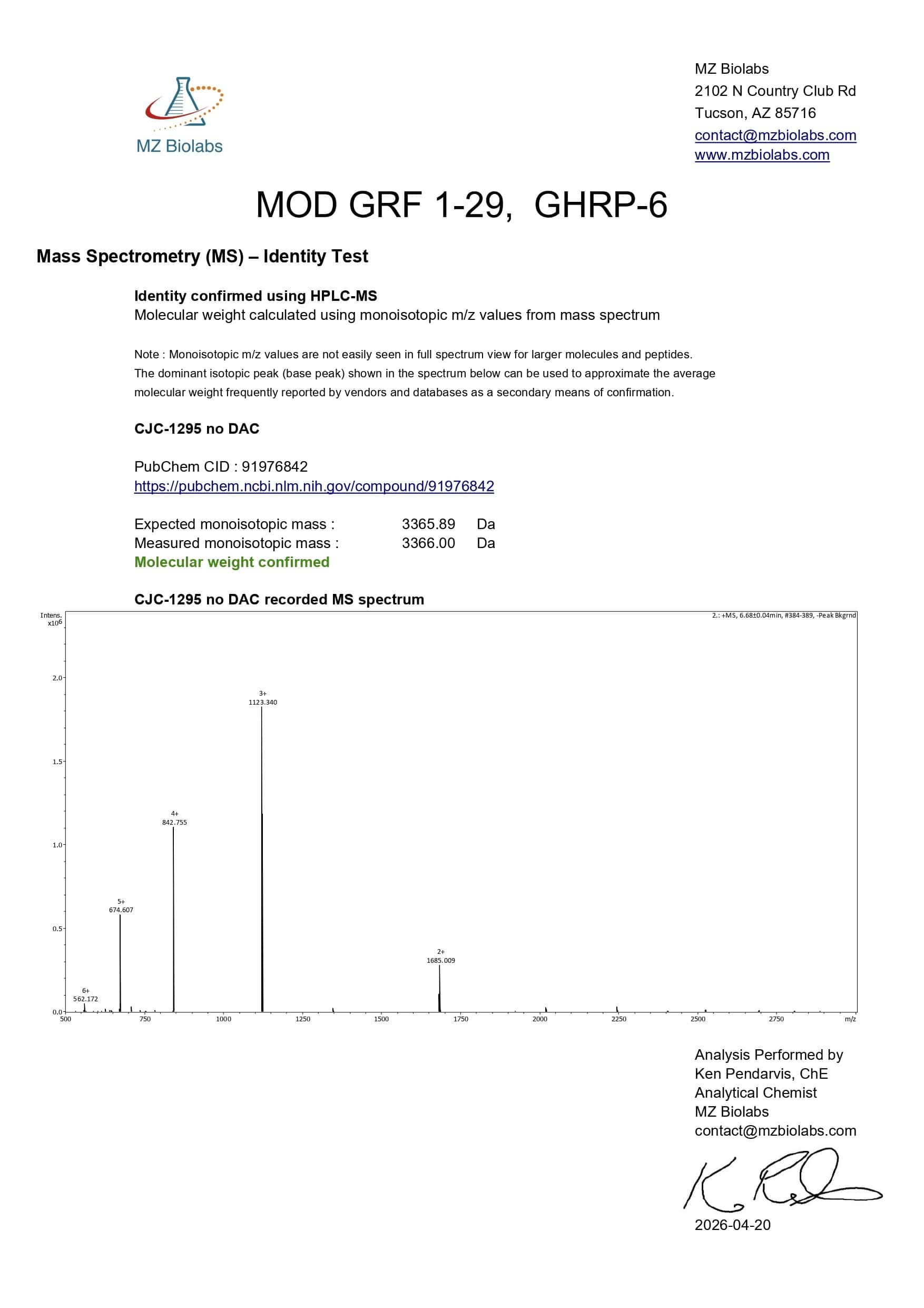
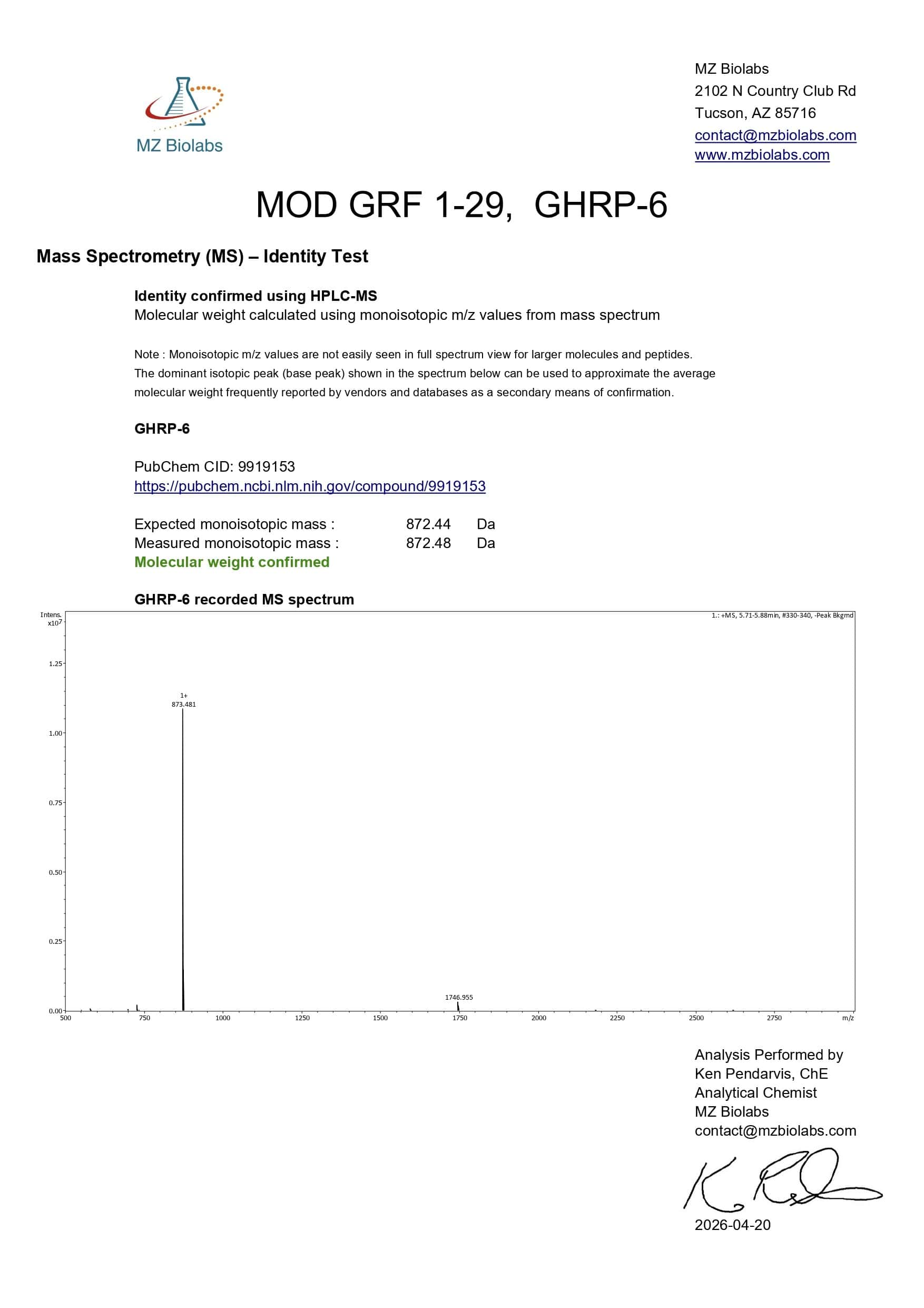
Purity checks out everytime. Peptides are as true as they can be. Always amazed with the standard
Jins Thomas –
standard can’t be beat. Have been a loyal customer for over a year and love doing business with them.
pept O –
supply dispatched efficiently and arrived in a timely manner. standard supply. Nice packaging.
carmen stone –
cunningham lauren –
lab Connel –
James Jacar –
Customer service is always helpful and knows how to fix any issues that I have ever come across.
Kelsey Z –
The company is legit. Raw has proved in the past 6 months that I’ve been using them that the peptides are of superb grade and support my research rather than hinder it. Have had to deal with BS from other companies with fraud products.
vial Choki –
thomas lynn –
anawagner W –
rebecca Avy –
Maureen E –
There is no competition when it comes to Amino. Everyone else should take notes, especially on customer support and issue handling.
thomas john –
Very glad I found you guys
mswanson Hawkin –
brittany Jonin –
Jacob Thomas –
Neo Symbo –
jennifer Lopi –
daniel castillo –
ymoran Eva –
Deborah H –
Deborah Sam –
bgonzalez Q –
adam James –
kathryn V –
Melissa Harry –
Melissa Harris –
gina San –
timothy SS –
jerome Cold –
tgutierrez F –